
Why Mantua Became the Sonnabend Art Collection’s Home
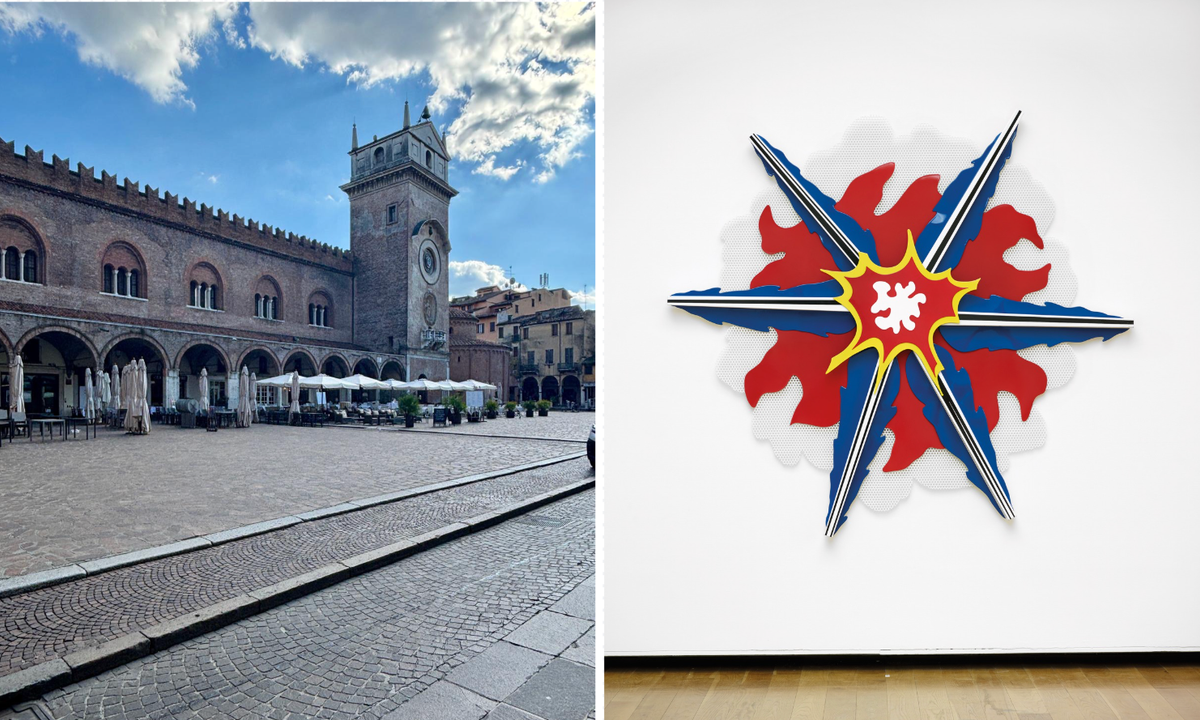
Ileana Sonnabend built her collection of postwar art—from Pop icons like Andy Warhol and Jasper Johns to Arte Povera pieces by Michelangelo Pistoletto—over decades as a dealer in Paris and New York. After her death in 2007, parts of it bounced between loans in Naples and Venice. Now, nearly 100 works have a dedicated space in Mantua’s 13th-century Palazzo della Ragione, continuing the city’s cultural continuum (Popolis), which opened to the public on November 29, 2024. The Art Newspaper details the partnership behind it: the Sonnabend Collection Foundation, Mantua’s municipality, and Marsilio Arte.
A Bridge Between Renaissance and Modern Art
The main draw was Mantua’s art history. Antonio Homem, Sonnabend’s adopted son and foundation president, explained in a speech after receiving honorary citizenship from the city. He fell for Mantua 50 years ago and saw no break between its old masters and today’s artists. “We recognize Jeff Koons in Giulio Romano and Giulio Romano in Jeff Koons,” he said, pointing to their shared drama and sensuality. Palazzo della Ragione sits next to the Ducal Palace’s Mantegna room and near Palazzo Te’s Giulio Romano frescoes. Homem called it a dream to spark dialogue there. La Voce di Mantova published his full remarks.
Mario Codognato, the museum’s director and matchmaker for the deal, compared Sonnabend to Renaissance collector Isabella d’Este, Mantua’s marchioness. Both women bought art from their era when few did. He told The Art Newspaper the location beat out others because it ties 20th-century works to Mantua’s past.
Practical Ties and Local Needs
One bonus link: Bernd and Hilla Becher’s photos from 35 years ago capture an industrial structure still standing in Mantua, Homem noted during installation.
For Italy, the collection fills a gap. Codognato said public holdings of postwar American art are thin, so students nationwide can now study Judd, Koons, and others up close. Mantua’s mayor, Mattia Palazzi, called it a step from Renaissance roots to a contemporary future, seeing the city as a threshold to modernity (Exibart), during the opening. The initial six-year loan could extend another six, but he wants it permanent. ARTnews covered the loan terms.
Exibart frames Mantua as a place of upward imagination, from Mantegna’s ceilings to Sonnabend’s vision, making the fit feel natural.