
Design Miami looks like a design fair, but it behaves more like a finely tuned cultural machine where galleries, luxury brands, and serious collectors treat chairs and lamps the way traders treat small-cap stocks. If you run a company or plan to start one, this event gives you a live case study in how a focused idea can grow into a multi‑city, multi‑revenue platform without losing its edge.
What Design Miami Actually Is
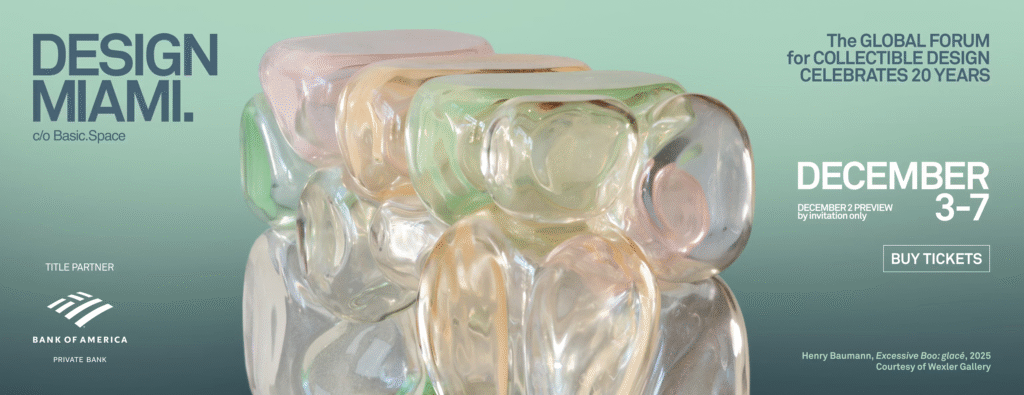
Design Miami 2025, image from designmiami.com
Design Miami focuses on “collectible design”: historically important or limited-edition furniture, lighting, and objects, all presented by galleries rather than mass retailers. Exhibitors such as Wexler Gallery and other specialists bring tightly edited selections that sit somewhere between sculpture and functional object, which attracts both museum curators and private collectors.
The flagship fair in Miami Beach runs in early December next to Art Basel Miami Beach, so collectors can walk from paintings and installations straight into a world of rare chairs and experimental materials. The fair sets up on Convention Center Drive and 19th Street with a VIP-heavy preview schedule and several public days, and it repeats the same playbook in Basel each June and in Paris each October.
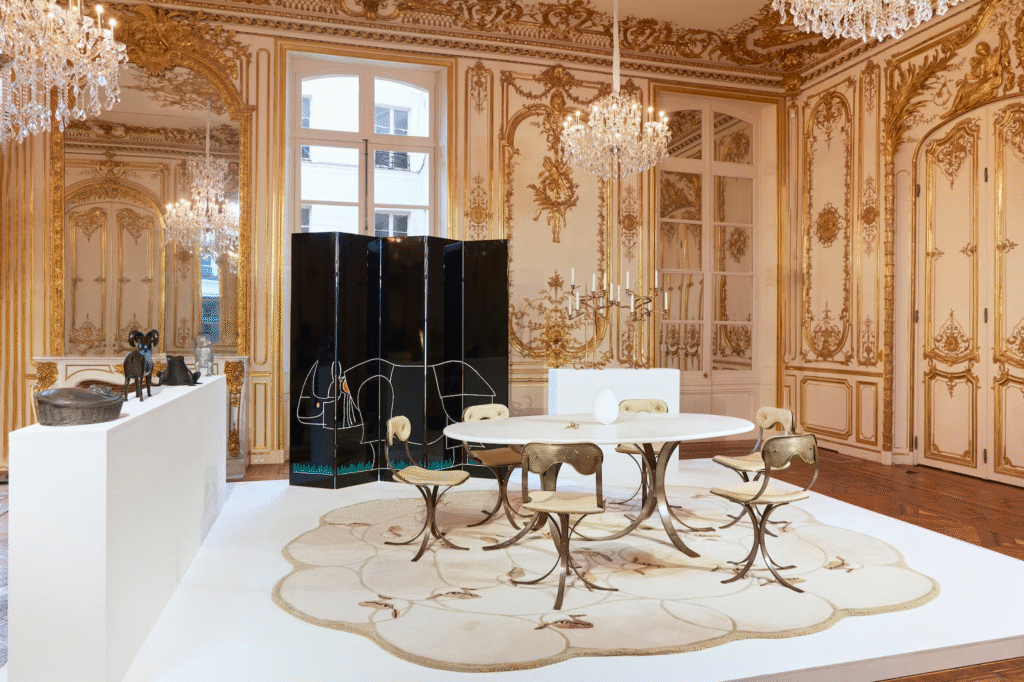
MOBILIER DE SALLE À MANGER BY FRANÇOIS-XAVIER LALANNE, Studio Shapiro for Design Miami, image from designmiami.com
Design Miami also runs a digital layer through the Design Miami Shop, which offers collectible design online from the same network of galleries that show at the fairs. Editors run Forum Magazine on the main Design Miami site and publish recorded talks on the Design Talks page, which turns the brand into a year‑round media channel, not just a few tents in December.
| Topic | Details |
|---|---|
| Main focus | Collectible design: high-value furniture, lighting, and objects shown by top galleries. |
| Flagship fairs | Miami Beach (December), Basel (June), Paris (October). |
| Extras | Podium exhibitions, In Situ activations, talks program, online shop. |
| Ownership | Basic.Space controls the company; founder Craig Robins and Dacra stay central; MCH Group (Art Basel owner) partners on the fair strategy. |
| Leadership | CEO Jennifer Roberts runs the business; curators such as Glenn Adamson direct individual editions. |
Did you know… The 2024 Paris edition took place inside the 18th‑century Hôtel de Maisons, where monumental pieces like a Jean Prouvé 1946 prefabricated house sat in dialogue with ornate historic interiors.
Where It Comes From and How It Grew
In the early 2000s, Miami developer and collector Craig Robins started to transform a neglected neighborhood into what now stands as the Miami Design District, filling it with design showrooms, galleries, and fashion houses. In 2005, he launched Design Miami in that context as a focused design fair to sit alongside Art Basel Miami Beach, giving collectible design its own spotlight rather than leaving it buried inside general art booths.
The Basel edition followed soon after and took up residence next to Art Basel in Basel, inside Hall 1 Süd at Messe Basel, which let the fair tap into Europe’s most established contemporary art week. For more than a decade, that two‑city rhythm—Basel in June, Miami in December—defined the brand and gave it a dependable calendar slot with a global audience.
Then the team started to test new formats. In 2020, Design Miami launched a smaller “Podium” exhibition in the Moore Building in Miami and later in Shanghai, a move the company now frames as part of a broader family of “Fairs & Activations”. The Our Fairs & Activations page now lists a growing slate of events that includes a one‑day program in Aspen with Range Rover during Aspen Art Museum’s ArtCrush and a two‑week In Situ exhibition on Korean design inside Zaha Hadid’s Dongdaemun Design Plaza in Seoul.
Paris marks the newest flagship addition. The company launched Design Miami.Paris in 2023 at L’Hôtel de Maisons and announced a third edition for 2025 that it promotes as its “largest gallery and Design at Large program yet.” Press coverage and official pages describe more than 20 galleries at the 2024 edition, along with major installations from brands such as Louis Vuitton, Saint‑Louis, Sèvres, and MycoWorks.
Rough map of Design Miami’s yearly activity now
| Type | Example in current calendar |
|---|---|
| Flagship fairs | Design Miami (Miami Beach), Design Miami/Basel, Design Miami.Paris.wikipedia+4 |
| Podium shows | Earlier “Podium x Shanghai” and Miami Podium editions, used as curated, smaller-scale exhibitions.designmiami+2 |
| In Situ activations | 2025 “Illuminated: A Spotlight on Korean Design” at Dongdaemun Design Plaza in Seoul, in partnership with Seoul Design Foundation.designmiami |
| One‑off programs | “A Day of Design in Aspen with Range Rover” running alongside Aspen Art Museum’s ArtCrush.designmiami |
So the event that started as one fair in Miami now spans at least three major cities plus rotating activations in places like Aspen and Seoul, all while it keeps its December slot in Miami Beach as the anchor.designmiami+3

Outdoor Design at Large installation at Design Miami.Paris 2024, photo © Ivan Erofeev for Design Miami image from .designmiami
Who Runs It and How the Money Works
Several power centers now shape Design Miami. Founder Craig Robins still chairs the fair through his company Dacra, which also steers the Miami Design District. In 2018, Swiss events company MCH Group, owner of Art Basel, deepened its involvement as a key partner on the design fair strategy, giving Design Miami access to deep fair‑operations know‑how and a shared collector base.designmiami+4
In 2023, digital marketplace Basic.Space acquired Design Miami, and its founder Jesse Lee became chairman, bringing stronger digital-commerce and brand-collaboration experience into the mix. CEO Jennifer Roberts, who took that role in 2015, continues to run the company and often speaks in interviews about balancing serious curatorial standards with sponsor support and partnerships. Individual editions rely on curatorial directors such as Glenn Adamson, who shaped the “Blue Sky” and “Make. Believe.” themes for Miami’s 20th and 21st editions.designmiami+7
No one publishes a full public budget for Design Miami, so you will not find a simple “this fair costs X and earns Y” line item. You can still see the main revenue stack and cost drivers when you piece together what the company reveals in public pages and what city and media documents describe.designmiami+2
How Design Miami earns money
- Gallery and program fees
Exhibitor information and fair overviews make it clear that galleries pay for booths in sections like Galleries, Curio, and Design at Large, just as they do at Art Basel and other fairs. Smaller Podium and In Situ programs also rely on fees and curated participation, which spreads revenue across more events without overwhelming the main shows.designmiami+5 - Sponsorships and brand integrations
Partners pages and press releases list luxury and financial sponsors that support lounges, installations, and talks. In Miami, the fair has worked with banks and private wealth brands that want direct access to the ultra high‑net‑worth crowd in town for art week, and recent coverage of Miami’s 2024 and 2025 editions mentions new private-banking sponsorships alongside long‑standing design and automotive partners.designnewsnow+6 - Tickets, passes, and VIP programs
The Miami 2024 fair page and Miami 2025 page lay out a ladder of preview and public hours: members preview, collectors preview, VIP hours, and general admission days, each of which ties to a different ticket or invitation status. The Paris fair page describes a similar pattern for that city, which shows how Design Miami earns from both trade visitors and public design fans. - Digital sales and content
The Design Miami Shop lists works tagged by fair and collection, such as “Design Miami/Basel 2024,” and lets galleries sell pieces online, effectively extending the commercial window of each fair. Forum Magazine articles and archived Design Talks support this by telling stories around designers and objects, which in turn help justify sponsorship and keep traffic flowing between events. - Public and civic support
Miami Beach city documents about cultural partnerships refer to Art Basel and Design Miami as drivers of “significant room night generation” and brand visibility for the city, which often translates into logistical support, policing, and marketing collaboration that lowers the fair’s effective cost base.
From a budget point of view, that cocktail looks appealing: a mix of predictable booth fees, premium brand money, diversified fair formats, and an online shop that works across time zones and months. Design Miami turns one week in December into a year‑round engine by thinking of itself as a platform more than just a tent.
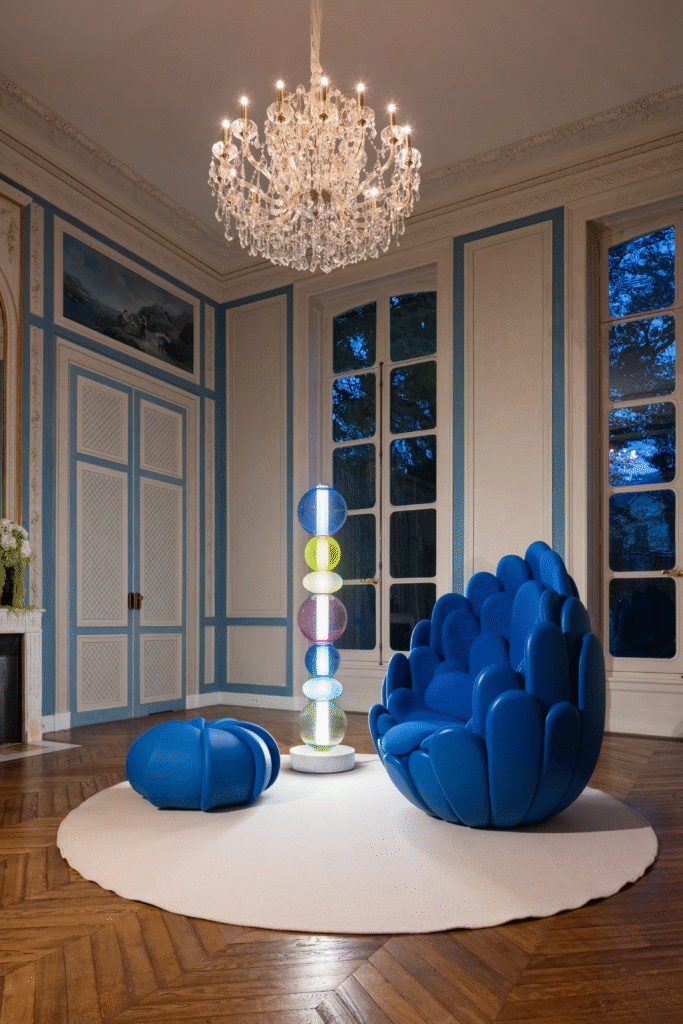
“Louis Vuitton ‘Objets Nomades’ installation with Estúdio Campana at Design Miami.Paris 2024, photos © Ivan Erofeev for Design Miami.”designmiami
How It Feels On The Ground
Design media usually treats Design Miami with a mix of respect and curiosity. An Azure Magazine preview of the 2023 fair framed it as the place where designers and brands present limited-edition experiments and ambitious installations that still stand out during an already packed Miami art week. A 2025 recap on Design News Now described the 20th Miami edition as “successful” and pointed out that galleries leaned into craft, material innovation, and sustainable approaches, not only glossy spectacle.
Galleries use the fair as both shop floor and stage. Wexler Gallery’s Design Miami 2023 page emphasizes how its booth focused on artists’ ties to their home countries, which suggests that the gallery treated the space as a compact museum narrative, not just a sales rack. The official Paris 2024 highlights story notes that a 1946 Jean Prouvé prefabricated house sold for over €1,000,000 and that galleries placed historical pieces in conversation with contemporary work from names such as Pierre Paulin, François‑Xavier Lalanne, and others.
Visitors often sound half‑amused and half‑awed. In one Reddit Miami thread about visiting fairs during Art Basel week, a user described a day that jumped between Art Basel and satellite events including Design Miami and admitted that the prices felt surreal, but the people‑watching and the chance to step into so many booths still made the ticket worthwhile. Another user in a r/ContemporaryArt discussion advised younger designers to work with galleries that already show at fairs like Design Miami, because those relationships shift both cost and credibility.r
Travelers on Reddit’s Paris travel forum compared the Paris and Miami weeks and pointed out that Paris offers a more compact circuit, while Miami packs events like Art Basel and Design Miami into a few days of sun, traffic, and crowded previews. That mix of glamour, inconvenience, and genuine artistic excitement shows up again and again in social posts on Instagram and image searches on X, where visitors share shots of striking installations and VIP wristbands in equal measure.
“You walk into Design Miami, see a single chair priced higher than your apartment, and still catch yourself smiling because the thing really does look like it should live in a museum.”
Video embeds you can use
Curated walk-through of Design Miami 2023 with commentary on key booths and pieces.[web:26]
“Healing Through Design” talk from Design Miami’s program, which shows the reflective side of the fair.[web:28][web:68]
What Entrepreneurs Can Learn From Design Miami
Once you step back from the art-week glitter, Design Miami reads like a well-executed business plan that grew in public view. Several moves translate directly to startups, media projects, and even solo creative practices.
1. Attach yourself to an existing magnet
Robins did not pick a random week for the first fair. He set Design Miami right next to Art Basel Miami Beach, which already drew top collectors, advisors, and museum people to the city. Basel and Paris editions now do the same thing in Europe: they run alongside major art weeks and tap into travel budgets and attention that already exist. When you plan a launch, ask, “Where does my audience gather anyway?” Then hook your event, release, or big announcement to that moment.aol+5
2. Start focused, then layer formats
For years, Design Miami ran as two flagship fairs in two cities, which let the team refine the exhibitor mix, collector base, and calendar rhythm. Only after that base settled did they add Podium shows, In Situ activations, Aspen programs, and the Paris flagship described on the Our Fairs & Activations page. You can follow the same pattern: nail one core product and one primary market, then introduce new editions, premium tiers, or regional spin‑offs when data and demand justify them.
3. Build a revenue stack, not a single line
Design Miami does not depend on one type of income. It earns from gallery fees, brand partnerships, ticketing, and online sales through the Design Miami Shop, with additional help from civic partners who like the hotel and tourism impact. When you sketch your own business model, map at least three distinct ways money can come in, and check that no single one can break the company on its own.
4. Treat themes as a steering wheel, not a slogan
Curatorial themes such as “The Golden Age: Looking to the Future,” “Blue Sky,” and “Make. Believe.” guide which galleries come, what they bring, and which collaborations the fair highlights, as you can see on pages for Miami 2024 and Miami 2025. Instead of choosing bland yearly mottos, pick one sharp phrase that reflects what you want to show your market this cycle and let that phrase influence features, visuals, partnerships, and content.
5. Design for both experts and Instagram
Coverage in Azure, Vogue, and other outlets shows how Design Miami wins with installations that work in photographs and reward close study. The Paris 2024 highlight story explains how galleries installed pieces like Lalanne dining sets and Prouvé architecture in ways that feel dramatic in a quick snapshot yet still interest historians and curators. Aim for the same balance: build products, booths, or content that hold up on a phone screen and still impress the people who know the field best.
6. Let content keep working after the tent comes down
The Design Talks archive, Forum Magazine on designmiami.com, and the official YouTube channel keep Design Miami visible long after each fair ends. That content makes future sponsorship packages stronger, helps exhibitors justify costs, and turns a handful of fair days into a steady presence in the design conversation. Whatever you run—an app, a studio, a course—treat every event or milestone as a chance to capture material that can live on as articles, talks, or videos.
“Design Miami shows that you can start with a very specific obsession—collectible design—and, with the right timing, partners, and patience, grow it into a platform that galleries, brands, and cities build their calendars around.”
If you like this kind of content, read more from livingaroundtheworld.com